Fingering vs DK vs Worsted: Which Yarn Weight to Choose
These three weights cover most knitting and crochet projects — but they behave very differently. Here's how fingering, DK, and worsted compare on thickness, yardage, drape, and speed, and which one your project actually wants.
Quick comparison
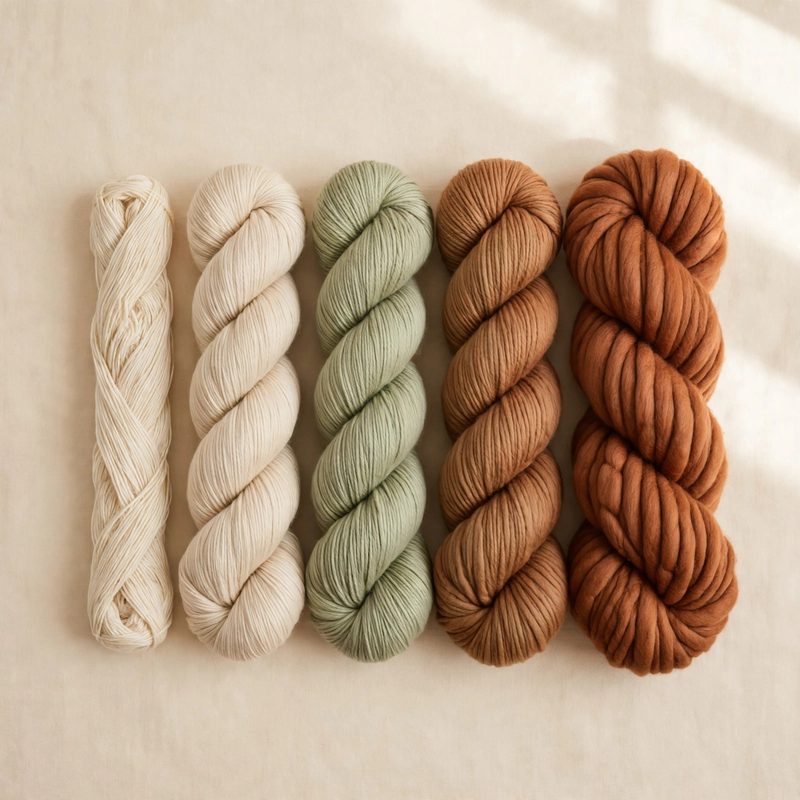
Fingering (1) is thin and light at 400–460 yards per 100 g — made for socks, shawls, and fine garments. DK (3), double-knitting, sits in the middle at 250–300 yards per 100 g — the all-rounder for sweaters and baby knits. Worsted (4) is the medium workhorse at 200–230 yards per 100 g — fast to work and forgiving for beginners. For the full 0–7 scale, see the yarn weight chart.
Fingering: delicate and drapey
Fingering gives you beautiful drape and stitch definition, which is why it dominates socks and shawls. The trade-off is time: a fingering-weight sweater needs around 2,000 yards and many more stitches than the same sweater in worsted. Choose it when drape matters more than speed.
DK: the sweater sweet spot
DK is the most popular garment weight for a reason: it drapes better than worsted, works up faster than fingering, and shows cables and texture beautifully. Most commercial sweater patterns are written for DK. A DK baby sweater takes roughly 700 yards; check the exact number for your size in the yardage calculator.
Worsted: fast and forgiving
Worsted is the beginner's best friend — stitches are easy to see, mistakes are easy to fix, and projects fly. It is the default for scarves, hats, and cozy throw blankets. The downside is bulk: worsted garments are warmer and heavier, with less elegant drape than DK or fingering.
So which one for your project?
Pick fingering for drape and detail, DK for garments you will wear often, and worsted for speed, warmth, and learning. Whatever you choose, confirm the skein count before buying — yarn weight changes both total yardage and yards per skein, and the calculator does that conversion in one step. And if a pattern calls for one weight but your stash has another, read how to substitute yarn in a pattern first.
What about the other weights?
Sport (2) is DK's lighter sibling — lovely for baby sweaters and light spring garments. Bulky (5) and super bulky (6) are the speed demons: a hat in super bulky can take under two hours, and a throw blanket flies by. Lace (0) belongs almost entirely to shawls. As a beginner, start with worsted, graduate to DK for your first fitted garment, and save fingering for when your tension is even.
When in doubt, check the pattern's recommended weight first — designers choose it for drape and fabric behavior, not just speed.
Turn this into exact yardage
Use the free calculator to convert what you learned into yardage and skein counts.
Frequently asked questions
Which is best for a sweater: DK or worsted?
DK, narrowly. It is lighter and drapes better than worsted while still working up reasonably fast — the sweet spot for garments you will actually wear.
Can I hold two strands of fingering together instead of DK?
Yes — one strand of fingering held double is approximately DK weight. You will need roughly twice the yardage, so run the numbers in the calculator.
Is Aran weight the same as worsted?
Sometimes. They are close in thickness (both around 200–280 yards per 100 g), but they are not identical — always check gauge with a swatch.